Silhouette Island Seychelles conservation: where a national park meets a single resort
Silhouette Island feels less like a holiday destination and more like a granite fortress rising from the Indian Ocean. With around 93 percent of the island protected as Silhouette National Park, formally designated in 2010 by the Seychelles National Parks Authority[1], the balance between raw nature and the single luxury resort is unusually, almost shockingly, in favor of conservation. For travelers used to the polished rhythm of Mahé or Praslin, this island offers a slower, more elemental Seychelles where the sea, the forest and the mountains set the agenda.
The main settlement at La Passe sits between steep forested slopes and a pale sand beach, while the rest of Silhouette is essentially wilderness threaded with a handful of trails. National park status covers mist forest, mangroves, coastal wetlands and high granite ridges, creating one of the most intact ecosystems among the inner granitic islands of Seychelles. This is where the island’s conservation ethos stops being a slogan and becomes the daily reality of how guests move, eat, and even swim in the sea.
The only resort, Hilton Seychelles Labriz Resort & Spa, occupies a narrow coastal strip yet feels discreet against the scale of the mountains. Because there is just one resort on the island, the usual competition for beaches, boats and viewpoints simply does not exist, and guests share the sand with giant tortoises and nesting turtles rather than with other properties. That single-property model, anchored by Hilton Seychelles and its Labriz identity, underpins a form of stewardship that treats the resort as a guest of the landscape rather than its owner.
Conservation work on Silhouette is managed on the ground by the Island Conservation Society (ICS), which runs a conservation centre near the resort[2]. Their ICS team focuses on habitat restoration, wildlife monitoring and education, turning the island into a living field lab for guests who care about endangered species and functioning ecosystems. The partnership between ICS, the Seychelles National Parks Authority and Hilton Seychelles Labriz Resort & Spa is the quiet engine that keeps Silhouette’s beaches, forests and reefs from tipping into overuse.
For business travelers extending a stay from Mahé, the contrast is immediate and bracing. One moment you are in a boardroom overlooking Port Victoria, the next you are stepping off a roughly 45-minute boat transfer into a place where cars are absent and the loudest sound is the sea on the reef[3]. Here, environmental protection is not a backdrop; it is the reason the resort exists at all, and the reason the island still feels like the Seychelles that older islanders talk about in the present tense.
Hiking Mount Dauban and the wild interior: trails through a living laboratory
Step inland from the main beach and Silhouette closes around you in green. The ascent of Mount Dauban, which rises to more than 740 meters above sea level (often cited as 751 m in Seychelles mapping data)[4], is the signature hike and the clearest expression of how protection here covers an entire vertical world of habitats. You move from coastal takamaka and badamier trees through dense palm forest into mist-drenched cloud forest where endemic plants cling to the granite like a final frontier.
The Mount Dauban trail is demanding rather than technical, with sections of steep, rooty ground that reward a reasonable level of fitness. Along the way, guides from the ICS team or the resort’s own nature specialists point out rare plants, including species that exist only on Silhouette and a few other granitic islands of Seychelles. This is where the island’s conservation story becomes tangible, as you see how different elevations host different assemblages of insects, reptiles and birds, many of them endangered or even critically endangered.
Other routes trace the ridges and river valleys that cut across the island, linking the main settlement with remote coves such as Grand Barbe on the western coast. These trails feel far removed from the curated paths of more developed islands, and you are more likely to meet a free-roaming giant tortoise than another hiking group. For travelers who have already walked the palm-shaded paths of Praslin’s Vallée de Mai, as described in guides to a one-week stay on that island, Silhouette offers a wilder, steeper counterpoint that deepens any Seychelles itinerary.
Silhouette’s protection also extends to the cultural landscape, and the Mount Dauban area carries the legacy of the Dauban family who once owned the island. Old plantation ruins and grave sites lie half reclaimed by the forest, reminders that human presence here has always been provisional compared with the granite and the sea. Hiking with a guide who understands both the natural history and the Dauban story turns a strenuous walk into a layered reading of the island’s past and present.
Because roughly 93 percent of the island is national park, the ratio of trail to infrastructure is inverted compared with most resort islands. Paths are narrow, often muddy, and occasionally blocked by fallen branches, which is precisely why ICS prefers guided hikes in the more sensitive zones. For guests used to manicured resort gardens, the interior of Silhouette is a bracing reminder that genuine conservation sometimes means accepting inconvenience in exchange for authenticity.
Beaches, bays and the quiet luxury of a single resort coastline
The main beach in front of Hilton Seychelles Labriz Resort & Spa is a long, pale arc framed by granite boulders and dense forest. At high tide the sea laps close to the villas, while at low tide the reef flat reveals pools where juvenile fish shelter among corals and seagrass. This is the public face of Silhouette’s conservation model, where guests feel the daily rhythm of the tides and see how the resort has been threaded between existing trees rather than imposed on a cleared site.
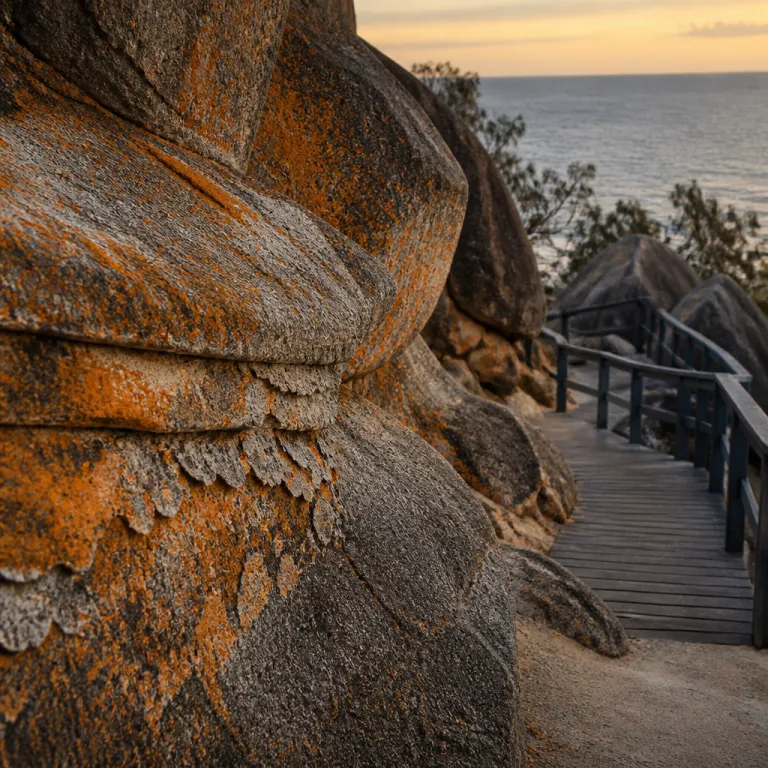
Walk north and you reach Anse Patates, a smaller cove sometimes written as Patates Anse, where the granite forms sculptural outcrops that photographers love. The beaches along this stretch, including the more secluded pockets beyond Anse Patates, are rarely crowded because the only potential visitors are fellow guests from the same resort. That limited footprint is central to island protection here, as fewer people on the beaches mean less pressure on nesting turtles, shorebirds and fragile dune plants.
To the south, Anse Lascar offers a different mood, with darker sand and a sense of being pressed closer to the forested slopes of Mount Dauban. Reaching Anse Lascar usually involves a guided walk, and ICS often uses this route to explain how coastal plants stabilize the shoreline and provide habitat for invertebrates and reptiles. The beaches on this side of Silhouette feel wilder, and the sea can be rougher, but the sense of being on one of the least altered islands of Seychelles is unmistakable.
On the far western side, Grand Barbe is the archetypal lost bay, a wide beach backed by wetlands and framed by the granite bulk of the interior. Getting there is a full-day undertaking, usually with a guide from the ICS team or the resort, and the reward is a coastline where you may see only a handful of other people. Conservation rules are particularly strict in this zone, with clear guidelines on where to walk, how to behave around turtles and which parts of the wetlands are off limits.
For guests planning when to visit Seychelles, Silhouette’s beaches are less about a specific month and more about understanding the seasonal trade winds and swell patterns. ICS and the resort’s marine team brief guests on which beaches are safest for swimming or snorkeling at different times, and which are better left to the turtles during nesting peaks. That kind of guidance is part of the quiet, service-led luxury here, where the best amenity is often a well-timed suggestion to choose one bay over another for the sake of both safety and conservation.
Giant tortoises, sheath tailed bats and the after dark life of the island
Silhouette is one of the few places in Seychelles where you can move from a spa treatment to a giant tortoise encounter in the space of an afternoon. ICS manages a breeding and rehabilitation programme near the resort, where Aldabra giant tortoises are monitored, cared for and gradually integrated into semi-wild areas[2]. In recent years, the ICS team has typically overseen several dozen tortoises on Silhouette at any one time, including juveniles and long-lived adults. Guests can visit with the ICS team, learning how the island’s conservation work supports both captive breeding and the protection of free-roaming individuals that graze near the beach and along forest edges.
These tortoise encounters feel markedly different from the more curated experiences on some other islands, because here the animals are part of a broader restoration strategy rather than a stand-alone attraction. Rangers explain how tortoises help disperse seeds of native plants, shaping the structure of the forest over decades, and why protecting nesting beaches for turtles also benefits these slow-moving grazers. For travelers who value substance over spectacle, the chance to see ICS staff at work is often as memorable as the animals themselves.
After dark, Silhouette reveals another layer of its biodiversity, including one of its most enigmatic residents, the Seychelles sheath-tailed bat. This tailed bat is critically endangered, with tiny populations scattered across a few granitic islands, and Silhouette is a key refuge where conservation measures focus on roost protection and habitat management[2]. ICS monitoring over the past two decades has often counted fewer than a hundred individuals across Seychelles, which makes quiet night walks and controlled observation particularly sensitive.
The ICS team also monitors nesting turtles along the beaches, including the main resort bay and more remote stretches such as Grand Barbe and Anse Lascar. During nesting season, guests may be invited to join controlled observations, standing back as green turtles or hawksbills haul themselves up the sand to lay eggs. Protocols are strict here, with red-filtered lights, distance rules and clear limits on group size to ensure that tourism supports, rather than disturbs, these endangered species.
Marine life just offshore is equally rich, with coral reefs, seagrass meadows and drop-offs that attract rays, reef sharks and shoals of tropical fish. Snorkeling and diving trips are run with an explicit conservation brief, including briefings on reef-safe sunscreen, buoyancy control and how to report sightings of unusual species to ICS. For guests who want to balance this wild side with more traditional indulgence, the resort’s spa and wellness facilities echo the approach of other high-end Seychelles spa resorts, where treatments are framed by views of the sea and the forest rather than by urban design.
How the single resort model shapes your stay and supports conservation
Staying at Hilton Seychelles Labriz Resort & Spa means accepting that Silhouette is not a place of endless dining options or nightlife. The resort offers several restaurants and bars, but once you arrive, your culinary and social world is essentially defined by this single property. For many guests, especially business travelers extending a stay from Mahé, that focus becomes a feature rather than a limitation, because it aligns with the island’s conservation-first ethos.
The resort’s operations are closely integrated with Silhouette’s environmental objectives, from waste management and water use to guided activities and guest education. Staff work with ICS to minimize light pollution that could disorient turtles, to manage boat traffic around sensitive reefs, and to support research on endangered and critically endangered species[2]. This collaboration is not abstract; it shapes everything from where new villas can be built to how often certain beaches are used for group events.
For travelers comparing Silhouette with more developed islands such as Praslin or La Digue, the trade-off is clear. You gain a sense of space, quiet and ecological integrity that is rare in the inner islands, but you give up the ability to dine at a different restaurant every night or to hop between multiple resorts. Those who value conservation and a strong sense of place tend to find that Silhouette’s single-resort model delivers a deeper, more coherent experience of Seychelles.
From a service perspective, the resort leans into this by offering tailored experiences that connect guests to the island’s natural rhythms, from sunrise yoga facing the sea to guided hikes timed for cooler hours. Spa rituals and wellness programmes draw on the same granite and ocean setting that defines the conservation story, echoing the philosophy of other Seychelles spa resorts that treat landscape as the primary luxury. For executives used to high-density urban hotels, the combination of attentive service and near total absence of external distractions can be both productive and restorative.
Practical planning matters here, because limited transport and a single resort mean you should book well ahead, especially if you want specific villa categories or private guiding with the ICS team. The ferry schedule from Mahé, usually around 45 minutes each way in normal conditions, defines your arrival and departure windows, and weather can occasionally disrupt crossings[3]. If you are building Silhouette into a wider Seychelles itinerary, consider pairing it with a more restaurant-rich island earlier in the trip, then using Silhouette as the quiet, conservation-focused finale where the only agenda is the tide, the trail and the slow movement of tortoises across the lawn.
Practical guidance for planning a conservation focused stay on Silhouette
Planning a stay on Silhouette Island starts with understanding that you are booking into both a resort and a national park. Accommodation options are concentrated at Hilton Seychelles Labriz Resort & Spa, so room type, orientation and proximity to the beach or facilities become your main variables. If the island’s conservation work is a priority, consider villas closer to the conservation centre or those with easy access to the quieter ends of the main beach, where wildlife encounters are more frequent.
Pack with the national park in mind, including sturdy walking shoes, lightweight long sleeves for forest hikes and reef-safe sunscreen for time in the sea. The ICS team and resort staff can advise on which trails are suitable for your fitness level, from shorter coastal walks to the full Mount Dauban ascent, and on the best times of day to avoid heat and maximize wildlife sightings. Because much of the island is steep and forested, weather can change quickly, so a light waterproof layer and a dry bag for electronics are sensible additions.
Respecting local conservation guidelines is straightforward but non-negotiable, and ICS provides clear briefings on arrival. Stick to marked trails, avoid handling wildlife, and follow instructions around turtle nesting sites, especially on beaches such as Grand Barbe, Anse Lascar and Anse Patates. If you are traveling with children, involve them in these briefings; many families find that the combination of resort comfort and hands-on conservation learning is a highlight of their Seychelles trip.
For those extending a business stay, Silhouette works well as a three- to five-night add-on, long enough to hike, snorkel, meet the conservation team and still enjoy unstructured time by the sea. Connectivity is generally sufficient for essential work, but this is not an island for back-to-back video calls, and that limitation often becomes a welcome boundary. When you leave, the memory that tends to linger is not the Wi-Fi speed but the feeling of walking from a meeting with ICS straight onto a near-empty beach where a giant tortoise grazes under a takamaka tree.
Before you travel, it is worth contacting both the resort and ICS to ask about current projects and opportunities for guest involvement. Some visitors choose to support specific initiatives, such as bat monitoring or turtle tagging, while others simply align their activities with the least impactful options. Either way, a stay on Silhouette offers a rare chance to let your hotel booking directly support the long-term health of one of the most remarkable islands in the Indian Ocean.
Frequently asked questions about Silhouette Island and conservation focused stays
How do I get to Silhouette Island from Mahé ?
Access to Silhouette Island is usually by scheduled boat transfer from Mahé, with the crossing taking around 45 minutes in normal sea conditions[3]. The service is typically coordinated through Hilton Seychelles Labriz Resort & Spa, which aligns departures with guest check-in and check-out times. Because capacity is limited and weather can affect timings, it is wise to confirm your transfer schedule when you book your stay.
What activities are available on Silhouette Island ?
According to the Island Conservation Society, “Hiking, snorkeling, wildlife observation, and luxury resort amenities.”[2] These activities are shaped by the island’s conservation priorities, so guided hikes, marine excursions and wildlife encounters are designed to minimize impact on sensitive habitats. Guests can also enjoy spa treatments, non-motorized water sports and cultural walks that explore the island’s Dauban-era history.
Is Silhouette Island suitable for families ?
Silhouette Island works well for families who appreciate nature and are comfortable with a quieter, more self-contained resort environment. Children can join guided walks, visit the giant tortoise programme and learn about turtles, bats and other species from the ICS team. Parents should be aware that the terrain can be steep and that some hikes, such as Mount Dauban, are better suited to older children or teenagers.
Can I visit Silhouette Island on a day trip instead of staying overnight ?
Day trips are sometimes possible but are less common than overnight stays, because the boat schedule and conservation guidelines limit casual visitor numbers. The island’s protection model favors guests who stay at least a few nights, allowing time to experience both the resort and the national park without rushing. If you are considering a day visit, check with Hilton Seychelles Labriz Resort & Spa and ICS in advance to understand current policies.
How does staying on Silhouette support conservation efforts in Seychelles ?
Every stay at Hilton Seychelles Labriz Resort & Spa contributes indirectly to the funding and visibility of conservation projects run by ICS and national partners. Guest fees, guided activity revenue and voluntary donations help support habitat restoration, wildlife monitoring and education programmes on the island[1][2]. By choosing Silhouette over a more heavily developed island, you also reduce pressure on other fragile beaches and reefs within the Seychelles archipelago.
Sources
[1] Seychelles National Parks Authority, Silhouette National Park designation and protected area coverage; [2] Island Conservation Society (ICS), Silhouette Island conservation centre, tortoise and bat programme summaries; [3] Hilton Seychelles Labriz Resort & Spa guest information on transfers and access; [4] Seychelles mapping and hiking resources for Mount Dauban elevation and trail data.