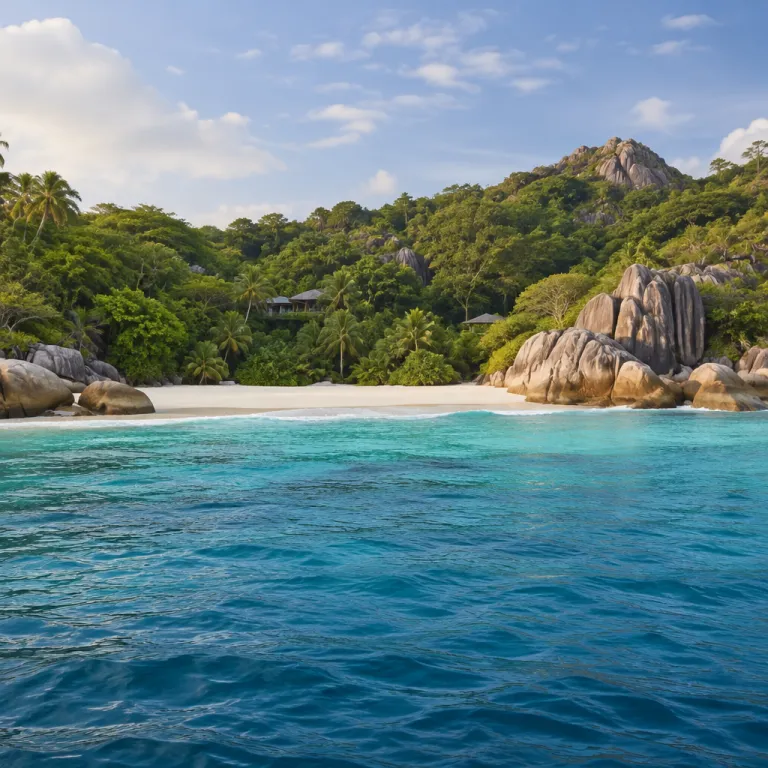
Why Seychelles Frégate stands apart among Indian Ocean private islands
Seychelles Frégate is a privately owned island 55 km east of Mahé in the Inner Islands of the Seychelles. This intimate private island combines a luxury resort with one of the region’s most ambitious conservation programmes. Travellers who value nature, privacy and refined service will find that this island resort feels closer to a private yacht than a conventional hotel.
The granite core of Frégate Island rises to 125 m at Mont Signal, giving the landscape a dramatic profile above the Indian Ocean. Around it, seven beaches curve in pale arcs, including Anse Victorin, often ranked among the best places to swim in the entire archipelago. On this Seychelles island setting, every villa faces the sea, with a private pool and wide deck that frame the changing light throughout the day.
Frégate Private is managed as a low density island retreat, with guest numbers capped to protect fragile habitats. The resort occupies only a small part of the 2.07 km² island, leaving most of the land to forests, coastal scrub and beaches that serve as nesting sites for turtles. This balance between a luxury resort and active conservation gives Seychelles Frégate a unique character that serious travellers immediately recognise.
The spirit of the island resort
Life on the island revolves around the rhythm of the sea and the forest. Guests move between their villa, the main resort area and the beaches by buggy or on foot, often meeting giant tortoises grazing quietly under takamaka trees. The feeling is of joining a private islands club where nature, not nightlife, sets the agenda.
Each year, the resort’s conservation team refines how guests can share the island without disturbing wildlife. Simple measures, such as guided access to sensitive beaches and strict rules on lighting, help protect rare species while keeping the guest experience relaxed. For travellers comparing Seychelles islands, this careful choreography is what makes Frégate Island one of the best places for low impact luxury travel.
The official website Frégate information emphasises that this is not a party island but a sanctuary. Guests who arrive expecting a conventional beach hotel quickly understand that the real luxury here is space, silence and the chance to join conservation activities alongside specialists. For many, that shift in perspective becomes the most memorable part of their stay on this private island.
Conservation at the heart of Seychelles Frégate
Frégate Island is widely regarded as a model for how a private resort can fund serious conservation. Before the current island resort was created in the 1990s, the land had been heavily altered by plantation agriculture and invasive species. Since then, the owners and their conservation team have worked systematically to restore native forest, protect endemic wildlife and keep the Seychelles ecosystem here free from new pests.
One of the most visible successes is the thriving population of giant tortoises that roam the island. These Aldabra giant tortoises, translocated under expert supervision, now number in the hundreds and are central to the island’s nature based experiences. Guests can walk among them with a ranger, learning how their grazing shapes the forest and why their long life span, often more than a century, demands long term planning from the conservation team.
Sea turtles also benefit from this careful management, with several beaches and nesting sites monitored each year by staff and volunteers. Travellers interested in marine conservation can extend their understanding by reading about a hawksbill turtle patrol and nesting count in Seychelles on a detailed turtle conservation experience. For guests at Seychelles Frégate, joining a guided walk at dawn to see fresh turtle tracks on Anse Victorin or another anse often becomes a highlight of their travel story.
Partnerships that give the island global relevance
The conservation work on Frégate Private is not an isolated effort. Long term partnerships with organisations such as BirdLife International, the Durrell Wildlife Conservation Trust and the Seychelles Government ensure that data from the island’s projects feeds into national and regional strategies. This collaboration has helped restore populations of rare birds and invertebrates, including species found only on this single island.
Biosecurity is another pillar of the programme, because keeping the island private and pest free protects decades of investment. Visitors are asked to respect strict rules on what they bring on board boats or planes, from luggage checks to footwear cleaning, to prevent rats or other invasive species returning. The resort’s airstrip, water bottling facility and solar systems all support this closed loop approach, reducing the need for frequent supply runs across the Indian Ocean.
For travellers choosing between luxury islands, these details matter more than they might expect. A hotel that funds habitat restoration, monitors Aldabra giant tortoises and protects turtle nesting zones offers a different kind of value than a resort focused only on design. On Seychelles Frégate, conservation is not a marketing slogan but the organising principle behind every guest experience.
Inside the villas: private pools, twin villa options and tailored service
Accommodation on Seychelles Frégate is designed to feel like a private residence rather than a standard hotel room. Each freestanding villa is positioned for maximum privacy, with lush planting between decks and uninterrupted views of the sea. The architecture uses local stone and timber, so the buildings sit lightly on the island and frame the surrounding nature instead of competing with it.
Every villa includes a generous private pool, often large enough for proper laps rather than just a plunge. Families or friends travelling together can opt for a twin villa configuration, where two villas share a discreet connecting path and can function as a single compound. This twin villa layout works especially well for multi generation travel, giving grandparents quiet space while keeping everyone close to the main resort facilities.
Service is anchored by the concept of a private chef and personalised dining. Guests can choose to dine on the main restaurant board, at the beach club or entirely in villa, with a private chef designing menus around preferences and seasonal produce. For many, breakfast by the private pool, with the Indian Ocean stretching beyond Anse Victorin, becomes a daily ritual that defines their memory of the island resort.
How the resort balances luxury and low impact design
Behind the scenes, the resort team works to ensure that each villa’s comfort does not compromise the Seychelles environment. Solar power, careful water management and on site bottling reduce the footprint of every private pool and air conditioned bedroom. Guests are encouraged to join behind the scenes tours, where engineers and the conservation team explain how infrastructure supports both comfort and conservation.
One of the most informative resources for potential guests is an in depth look at Frégate Island as a rarefied private sanctuary. Reading it before booking helps travellers understand why the resort limits guest numbers and how that affects availability throughout the year. It also clarifies why rates reflect not only villa size and private pool features but also the ongoing cost of maintaining a pest free island habitat.
For travellers comparing Seychelles Frégate with other luxury islands, these operational details provide useful context. A hotel that runs its own nurseries, funds a conservation team and manages an airstrip inevitably operates differently from a mainland resort. Guests who value transparency often say that this openness about how the island functions deepens their appreciation of every comfort they enjoy.
Experiences that define travel to Frégate Island Seychelles
Days on Frégate Island unfold at an unhurried pace, shaped by tides, light and personal preference. Some guests spend long mornings at Anse Victorin, where the curve of the bay and offshore reef create a sheltered swimming lagoon. Others prefer to explore lesser known anse beaches, each with its own character, from dramatic surf to calm, glassy water.
Guided nature walks are a core part of the Seychelles Frégate experience, and they go far beyond casual strolls. Rangers lead small groups through forest trails, explaining how native trees were reintroduced and how giant tortoises help disperse seeds across the island. Along the way, guests may see rare birds, unusual invertebrates and signs of the long term restoration work that would be easy to miss without expert interpretation.
Marine activities centre on the surrounding Indian Ocean, with snorkelling, diving and boat excursions available most days of the year. The sea here supports healthy coral communities and abundant fish life, thanks in part to the island resort’s careful management of boat traffic and anchoring. For many travellers, the contrast between time in the water and quiet hours by their private pool creates a satisfying rhythm that defines their stay.
Joining conservation activities as a guest
One of the most distinctive aspects of travel to this private island is the chance to join real conservation tasks. Depending on the season, guests may help the conservation team plant native seedlings, monitor turtle tracks on nesting beaches or record sightings of giant tortoises along forest paths. These activities are structured so that participation supports, rather than disrupts, the ongoing research programmes.
Families often find that children engage more deeply with nature when they can share these hands on experiences. A year might be remembered for a morning spent helping rangers check on Aldabra giant tortoises or learning how to read turtle tracks at Anse Victorin, moments that can be more impactful than any classroom lesson. Back at the villa, parents and children can talk through what they have seen while relaxing by the private pool, reinforcing the sense that this is not just a luxury resort but a living classroom.
For guests who prefer quieter engagement, the resort library and conservation centre offer maps, species lists and historical context about Frégate Private. Reading about how the island moved from plantation to protected habitat, then stepping outside to see the results, gives travel here an unusual depth. In this way, Seychelles Frégate becomes both a retreat and a reference point for how private islands can contribute to regional conservation goals.
Planning your stay: access, booking strategies and combining islands
Reaching Frégate Island requires a little more planning than a standard Seychelles hotel, and that is part of its appeal. Guests typically arrive on Mahé, then transfer by helicopter or light aircraft to the island’s grass airstrip, or by boat when sea conditions allow. This extra step reinforces the feeling of travelling to a genuinely private island, set apart from the busier Inner Islands circuit.
Because the resort limits guest numbers, it is wise to reserve well in advance, especially if you need a specific twin villa configuration or have fixed travel dates. Availability can be particularly tight at certain times of the year when wildlife activity peaks, such as key nesting periods for turtles. Working with a specialist agency or a dedicated luxury hotel booking website for Seychelles can help you align your preferred villa, flights and conservation experiences.
Many travellers choose to combine Seychelles Frégate with a stay on Mahé or another island resort to experience different sides of the archipelago. For example, you might begin with a few nights at an elegant island retreat on Port Launay, such as the property described in a detailed review of Constance Ephélia on Mahé. From there, transferring to Frégate Private allows you to move from a larger resort with multiple restaurants and pools to an intimate private island where your villa, private pool and private chef become the centre of daily life.
Choosing the right villa and board options
When booking, pay close attention to villa categories, orientation and inclusions. Some villas sit higher on the island with sweeping Indian Ocean views, while others nestle closer to the sea and offer quicker access to Anse Victorin or another favourite anse. All provide a private pool, but sizes and layouts vary, so discussing your preferences with the reservations team or your travel advisor can help match you with the right option.
Board plans also deserve careful thought, because dining is a central part of the Seychelles Frégate experience. Many guests opt for a plan that includes most meals, then add special experiences such as beach picnics, in villa barbecues with a private chef or tasting menus that highlight local produce. This approach keeps costs predictable while leaving room for spontaneous moments, like a last minute dinner arranged on the deck of your twin villa as the sun sets over the Indian Ocean horizon.
For those using a luxury hotel booking website focused on Seychelles, look for detailed descriptions of what each rate includes. Transparent information about transfers, conservation levies and board options will help you compare Seychelles Frégate fairly with other private islands. Remember that part of what you are funding here is not only a villa and pool but also the ongoing work of the conservation team that keeps the island’s nature thriving.
How Seychelles Frégate fits into the wider Seychelles luxury landscape
Within the constellation of Seychelles islands, Frégate occupies a very specific niche. It is a true private island, with a single luxury resort and no separate village or public infrastructure. That makes it ideal for travellers who value seclusion, personalised service and a strong connection to nature over nightlife or shopping.
Compared with larger island resorts on Mahé or Praslin, Seychelles Frégate offers fewer rooms but more space per guest, both on land and at sea. The ratio of staff to guests is high, which allows for thoughtful touches such as a dedicated private chef, flexible dining times and tailored excursions. At the same time, the resort’s commitment to conservation means that some typical resort features, like bright beachfront lighting or motorised water sports in sensitive bays, are deliberately limited.
For many travellers, the ideal Seychelles itinerary involves a mix of experiences across different islands. You might start on a main island base to explore markets, cultural sites and accessible beaches, then move to Frégate Private for a period of deep rest and immersion in nature. In this context, Seychelles Frégate becomes the quiet crescendo of your journey, a place where days revolve around your villa, your private pool and the slow rhythms of the Indian Ocean.
Using a booking website to match expectations and reality
When researching Seychelles Frégate on a hotel booking website, pay attention to more than just images of villas and pools. Look for clear explanations of the island’s conservation ethos, the role of the conservation team and how guests can join or share in their work. A good website Frégate page will also outline access logistics, seasonal wildlife highlights and the balance between privacy and guided activities.
Reading guest reviews with a critical eye can help you decide whether this private island suits your travel style. Guests who value nightlife, shopping or large scale entertainment may find the island resort too quiet, while those who cherish space, silence and nature usually rate it among the best places they have ever stayed. Matching your expectations to the reality of a conservation led luxury resort is the surest way to ensure that Seychelles Frégate feels like the right choice.
As one official explanation notes, “Why is it called Frégate? Named after frigate birds once abundant around island”. That simple statement captures the essence of this place, where the name, the landscape and the resort’s mission all point back to the same idea. On this Seychelles sanctuary, luxury and conservation are not competing concepts but two sides of the same carefully balanced experience.
Key figures and conservation statistics for Frégate Island Seychelles
- Frégate Island covers approximately 2.07 km², making it small enough for guests to explore on foot yet large enough to support multiple habitats from coastal scrub to upland forest.
- The island lies about 55 km east of Mahé, a distance that typically translates to a 15 to 20 minute flight by light aircraft, depending on conditions over the Indian Ocean.
- The highest point, Mont Signal, reaches around 125 m above sea level, giving several villas and viewpoints wide panoramas across the surrounding islands.
- The resident population, including staff, was recorded at just over 200 people in the 2010 census, which underscores how low guest density remains compared with larger island resorts.
- Conservation milestones include the eradication of invasive rats in the early 2000s under a dedicated restoration project, a step that allowed ground nesting birds and turtle nesting sites to recover significantly.
Frequently asked questions about Seychelles Frégate
How do you reach Frégate Island from Mahé ?
Guests usually fly from Mahé to Frégate’s private grass airstrip by helicopter or light aircraft, with flight times often around 15 to 20 minutes. In suitable sea conditions, boat transfers may also be arranged, although air transfers are more common for comfort and reliability. All options should be coordinated through the resort or your Seychelles hotel booking website to align with international flight arrivals.
Is Frégate Island really pest free and why does it matter ?
Frégate is managed as a pest free island, with invasive rats and cats eradicated under expert supervision. Strict biosecurity measures for all guests, staff and supplies help prevent reintroduction, protecting ground nesting birds, turtles and rare invertebrates. This status is crucial because it underpins the success of the island’s conservation programmes and justifies the careful limits on visitor numbers.
What wildlife can guests expect to see on Seychelles Frégate ?
Guests commonly encounter free roaming giant tortoises, including Aldabra giant tortoises, along paths and in forest clearings. Depending on the season, they may also see sea turtles using the nesting beaches, as well as rare birds and endemic invertebrates unique to the island. Guided walks with the conservation team are the best way to understand how these species fit into the wider ecosystem.
Is Seychelles Frégate suitable for families with children ?
The resort welcomes families and offers twin villa configurations, flexible dining with a private chef and tailored nature activities for younger guests. Children can join age appropriate conservation experiences, such as gentle encounters with giant tortoises or supervised visits to turtle monitoring sites. Families who value space, privacy and educational travel often find this private island particularly rewarding.
How far in advance should I book a stay on Frégate Private ?
Because the island resort has a limited number of villas and prioritises low guest density, it is wise to book several months ahead, especially for peak wildlife seasons or specific villa types. Travellers seeking a twin villa, particular views or extended stays should plan even earlier to secure their preferred dates. Using a specialist Seychelles hotel booking website or advisor can help coordinate flights, transfers and villa availability efficiently.