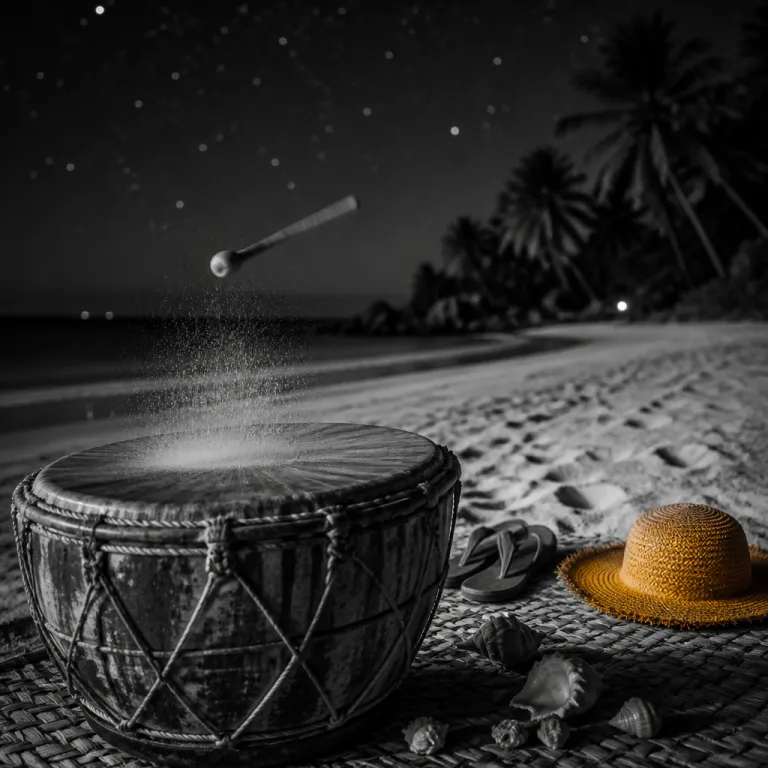
Moutya Seychelles traditional ceremony beyond the resort stage
Moutya under the stars is the Seychelles traditional ceremony that most luxury travelers never see. This drum-and-dance ritual grew from the nights when enslaved Africans gathered on remote island beaches, turning pain into rhythm and resistance into art. Today the same moutya drums still pulse through the Indian Ocean darkness, carrying a history and culture that no hotel cultural night can match.
On Mahé and Praslin, Seychellois communities still organise intimate moutya gatherings on quiet stretches of sand, far from the polished resort amphitheatres. The circle forms around a bonfire, the goatskin moutya drum is warmed by the flames, and Seychellois Creole voices rise in call and response that feels both fragile and unbreakable. This is not staged folklore; it is living Creole culture, a heritage practice that links the islands back to the French colonial plantations and the African coast in the same breath.
In 2021, UNESCO recognised moutya as an element of Intangible Cultural Heritage, inscribing it on the Representative List of the Intangible Cultural Heritage of Humanity under the title “Moutya”.[1] That recognition has not frozen the dance in a museum case. Instead, moutya’s UNESCO status has strengthened local pride and encouraged a national conversation about how to protect heritage arts while allowing them to evolve. The Seychelles Tourism Board now speaks of this traditional ceremony alongside the archipelago’s natural UNESCO sites, positioning the practice as essential to understanding the islands, their Creole culture, and the Seychellois Creole language that wraps every verse.
From resistance to recognition: how moutya reshaped Seychellois identity
To understand why a moutya Seychelles traditional ceremony matters, you need to feel how it began as a whispered defiance. Enslaved Africans on remote Seychelles plantations used the night, the bonfire, and the moutya drum to create a space where French colonial power could not fully reach. That space became a melting pot of African rhythms, French words, and island realities, eventually forming the backbone of Seychellois Creole culture.
Over time the dance steps, the music, and the lyrics evolved, but the core remained a cultural act of survival and self-definition. The circular dance around the fire, hips low and feet close to the sand, still echoes the earliest descriptions of this traditional ceremony on each island where it survived. When UNESCO added moutya to its Representative List of the Intangible Cultural Heritage of Humanity in 2021, it acknowledged not only a dance but a complete cultural system of memory, language, and resistance.
Local experts often summarise it simply for visitors who ask, and one foundational explanation is worth repeating without alteration: "What is Moutya?" and the answer "A traditional Seychellois dance with African origins." That definition is deceptively concise, because the moutya–sega connection to other Indian Ocean forms like sega on Réunion Island and sega from Mauritius and Rodrigues reveals a wider regional story. As Seychellois cultural practitioner Patrick Victor has noted in interviews with the Creative Seychelles Agency, the drum-based heritage arts of the western Indian Ocean became “a coded language for people who had almost everything else taken from them.” Across these islands, such practices carried the voices of communities in motion, and Seychelles now holds that responsibility with a quiet, confident pride.
What to expect when you attend a moutya under the stars
Arriving at a genuine moutya Seychelles traditional ceremony feels very different from walking into a resort entertainment program. You step off the road, follow the glow of a small fire on the beach, and hear the first low heartbeat of the moutya drums rolling across the sand. The air smells of salt, smoke, and sometimes grilled fish, while the Seychellois voices tuning their music blend Creole, French, and African inflections.
The ceremony usually begins slowly, with one or two performers testing the goatskin moutya drum near the flames to tighten its tone. A lead singer starts a line in Seychellois Creole, the circle answers, and the dance emerges almost casually as couples step into the light, hips tracing the rhythm in a traditional pattern that is both playful and charged. Over time the tempo rises, the cultural energy thickens, and you realise this is not a show but a communal art form where every island story, every fragment of history and culture, can surface in the lyrics.
Visitors are often invited to join the dance, but the etiquette is to watch first and read the circle before stepping in. Respect the space, dress simply, and remember that photography should never interrupt the flow of the cultural ceremony or the concentration of the drummers. If you are staying at a luxury property on Mahé or La Digue, ask the concierge to connect you with the Creative Seychelles Agency, the National Arts and Crafts Council, or a recognised Seychellois cultural association rather than a generic hotel event, because authenticity here will always beat convenience.
Planning a luxury stay around authentic cultural experiences
For couples booking premium stays, the key is to let the moutya Seychelles traditional ceremony shape one evening of your itinerary rather than treating it as a last-minute add-on. Choose a property that understands Seychellois culture and works with local partners, not just with in-house entertainment teams. On Mahé, that might mean a hillside retreat near Victoria that can arrange a private transfer to a community moutya night, then pair it with a daytime visit to the National Museum of History and the nearby Creative Seychelles Agency offices.
On Praslin, a refined beach resort can coordinate with Seychellois cultural groups who host occasional moutya–sega gatherings, where sega and moutya music share the same sandy stage. Combine that with a guided walk through old plantation sites, where the French colonial past is still visible in Creole architecture and in the stories told by local guides. The contrast between the quiet luxury of your suite and the raw energy of the dance underlines how deeply this cultural heritage runs through the islands.
If you are splitting your time between islands, consider adding La Digue, where the pace slows and the island still feels shaped by bicycles and tides rather than traffic. A slow cycling day, planned with a guide like the one in this guide to exploring La Digue by bicycle, pairs beautifully with an evening devoted to music and heritage arts back on Mahé. Across the Seychelles, the best luxury itineraries now weave in at least one night where the only soundtrack is the moutya drum, the sea, and the voices of a community telling its own story.
Where moutya lives today: institutions, islands, and the future
While the heart of any moutya Seychelles traditional ceremony still beats on the beach, several institutions quietly support its survival behind the scenes. In Victoria, the Creative Seychelles Agency, the National Arts and Crafts Council, and the National Heritage Research and Protection Section work with elders and drummers to document rhythms, lyrics, and dance steps. This institutional effort ensures that moutya’s UNESCO recognition translates into real protection for the intangible cultural knowledge held by Seychellois communities.
Beyond Mahé, cultural networks link the Seychelles islands with neighbours across the Indian Ocean, including Réunion Island and Mauritius and Rodrigues, where sega and related forms share similar roots. Exchanges between drummers and dancers from these islands highlight how moutya–sega belongs to a wider regional cultural heritage, even as each island keeps its own style. These collaborations also help younger Seychellois see their Creole culture not as something fragile, but as part of a strong, interconnected art tradition that stretches from one island to another.
The challenge now is time, because fewer young people are willing to commit to the long evenings of practice required to master the moutya drums and the subtle timing of the dance. Tourism can help or harm; luxury travelers who seek out authentic ceremonies, support local groups, and visit museums and cultural centres send a clear signal that this history and culture matters. When you plan your stay, ask your hotel how it supports Seychellois Creole artists and whether it partners with recognised cultural organisations rather than importing generic entertainment.
How to choose hotels that respect moutya and Seychellois culture
Not every five-star property in the Seychelles treats the moutya Seychelles traditional ceremony with the respect it deserves. When you browse options on a luxury and premium hotel booking website, look beyond the generic promise of a "cultural show" and read how the property speaks about Seychellois culture in detail. A serious hotel will name its local partners, reference Seychellois Creole traditions accurately, and often highlight visits to museums or the Creative Seychelles Agency rather than only in-house performances.
Ask direct questions before you book, because the answers reveal how deeply the hotel understands its island context. Does the property support Seychelles national cultural initiatives, or work with the Creative Seychelles Agency on training programs for staff about history, culture, and intangible cultural heritage? Are their moutya or sega evenings led by recognised community groups, or are they simplified versions that flatten the dance into a quick photo opportunity for guests who never hear the real music or the stories behind it?
The most rewarding stays tend to be on properties that see themselves as part of a living cultural landscape, not just as isolated luxury bubbles on an island. These hotels will gladly arrange for you to attend a community-led moutya under the stars, then follow it with a daytime visit to a plantation house where the French colonial past is explained with nuance. In that combination of night and day, drum and archive, island beach and museum room, you experience the full arc of Seychellois identity, from oppression to resilience to a confident, modern Creole culture that still dances by firelight.
FAQ about moutya in the Seychelles
When is moutya usually performed in the Seychelles?
Moutya is typically performed in the evenings, often on beaches or at cultural events when communities gather after the heat of the day. Some groups prefer nights close to the full moon, echoing older practices when light and tides shaped island life. During major cultural festivals such as the Creole Festival in October, you may find several moutya Seychelles traditional ceremony events across different islands.
Where can travelers experience an authentic moutya ceremony?
Authentic moutya is most often found at community-organised events on Mahé and Praslin, held on quieter beaches or at cultural venues rather than inside resorts. Local cultural associations, the National Museum of History in Victoria, or the offices of the Creative Seychelles Agency can point you toward upcoming ceremonies. When in doubt, ask your hotel concierge specifically for community-led moutya, not just a generic dance show.
Is it appropriate for visitors to participate in the dance?
Visitors are usually welcome to join the dance once they have watched and understood the rhythm of the circle. The respectful approach is to wait for an invitation or a clear gesture from performers before stepping forward. Keep movements modest, follow the lead of Seychellois dancers, and remember that this is a cultural ceremony, not a nightclub floor.
How is moutya different from sega in the Indian Ocean region?
Moutya and sega share African roots and drum-based rhythms, and both developed under French colonial rule on islands like Seychelles, Réunion Island, and Mauritius and Rodrigues. Moutya tends to be slower, more hypnotic, and closely tied to the bonfire setting, while sega often uses additional instruments and a brighter tempo. Many cultural events now present moutya–sega together, highlighting both the shared heritage and the distinct island styles.
Do I need to book a special tour to attend a moutya night?
You rarely need a formal tour, but you do need good local information and safe transport, especially at night. High-end hotels can arrange a driver and connect you with recognised cultural groups, ensuring that your presence supports the community rather than disrupting it. For couples planning a romantic stay, building one evening around a moutya Seychelles traditional ceremony is often the most memorable cultural experience of the trip.
Practical logistics: transport, costs, and etiquette
Most community moutya nights are free or ask for a small contribution, with typical donations or informal tickets often ranging from roughly SCR 50 to SCR 200 per person, based on recent visitor reports. A private taxi from a luxury hotel on Mahé to a beach near Victoria or Anse Royale might cost around SCR 300–600 each way, depending on distance and time of night; these figures are approximate and should be confirmed locally with your hotel or driver. Arrange your return transfer in advance, carry only essentials, avoid flashing valuables, and follow a simple checklist: ask permission before taking close-up photos, do not touch the drums without an invitation, keep alcohol consumption discreet, and leave the beach as clean as you found it.
[1] UNESCO, “Moutya,” Representative List of the Intangible Cultural Heritage of Humanity, inscribed 2021.