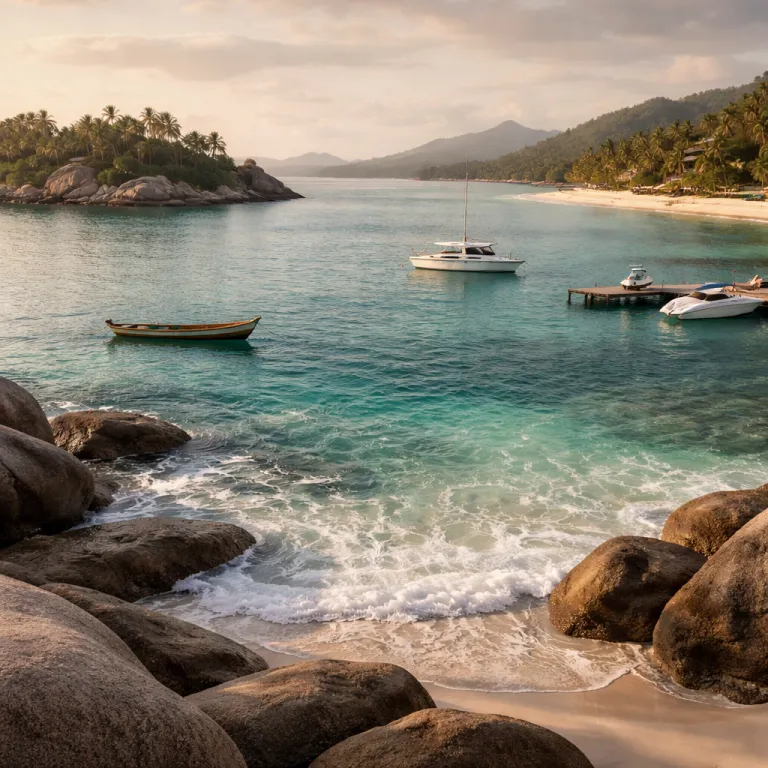
Luxury multi‑island travel in Seychelles: how to plan an island‑hopping escape
Why a single island stay undersells travel Seychelles
Travel to Seychelles properly and you realise one island never tells the full story. The Seychelles islands stretch across the Indian Ocean as a granite and coral constellation, and each island offers a different rhythm, price point and style of luxury for travelers who care about both privacy and place. Couples who limit their Seychelles travel to a single resort on one island often miss the contrast between Mahé’s forested peaks, Praslin’s languid beaches and La Digue’s slow, bicycle‑paced streets.
The Republic of Seychelles counts 115 islands, yet most first‑time visitors only see one main island and perhaps a day trip, which is a shame when the classic Mahé–Praslin–La Digue triangle can be navigated with ferries and short flights that feel more like scenic excursions than transfers. When you travel across these islands Seychelles reveals how the same Indian Ocean light plays differently on Mahé’s eastern coast, on the sculpted coves of Praslin and on the shallow lagoons near the smaller islands that ring La Digue. For couples planning a romantic escape, the best itineraries balance at least two islands, sometimes three, and then add an outer island for a final, ultra‑private chapter.
Think of travel in Seychelles as a curated sequence rather than a single stop, because the services, hotel styles and even the way you pay with Seychellois rupee or credit cards can shift subtly from island to island. On Mahé the main international airport connects the republic to the Middle East, to the coast of Africa and to Europe, and that same hub makes it easy to tag on a few nights on Praslin or an outer island without losing time. For discerning travelers, the best luxury comes from this sense of movement, where each new island view reframes the same sea and sky in a fresh way.
The classic Mahé–Praslin–La Digue route for luxury travelers
For most couples, the most efficient way to travel Seychelles in depth is the three‑island arc of Mahé, Praslin and La Digue. This route works beautifully because the distances between each island are short, the ferry and flight schedules are frequent, and the contrast in scenery is dramatic enough that every transfer feels like an upgrade rather than a chore. When you visit Seychelles with this structure, you can calibrate your budget by pairing a high‑end hotel on one island with a more modest but charming stay on another, without ever compromising on the overall sense of luxury.
Start on Mahé, where the international airport sits just outside Victoria and where most international travelers first feel the humid air of the Indian Ocean after a long flight from the Middle East or the coast of Africa. Here, a hillside luxury hotel above the eastern coast gives you a sweeping view of Sainte Anne Marine National Park, while a property on the west coast puts you closer to sunset beaches and surf, and both options offer polished services that set the tone for the rest of your Seychelles travel. Cat Cocos ferries link Mahé and Praslin in about an hour, and this Mahé–Praslin crossing is usually smooth outside the November–March wetter months, when seas can be choppier and motion sickness tablets become a wise accessory.
On Praslin, couples often choose a luxury hotel near Anse Lazio or Côte d’Or, then use a day to visit the Vallée de Mai before hopping on the short Praslin–La Digue ferry. La Digue, or simply “Digue” as many Seychellois say, rewards slower travel, and a guesthouse here in the 80 to 150 dollar range can offset a splurge on Praslin without diluting the romance. When you read any serious review of multi‑island itineraries, this three‑stop route consistently emerges as the best balance between logistics, cost and the sheer pleasure of waking up to a new island view every few days, and it is no surprise that guides celebrating Seychelles as a dream destination for couples highlight exactly this combination.
Do I need a visa to visit Seychelles? No, but a Travel Authorization is required. What is the currency in Seychelles? The Seychellois rupee. What languages are spoken in Seychelles? Creole, English, and French.
Designing 7, 10 and 14 day itineraries across Seychelles islands
Time is the real luxury when you travel Seychelles, so the number of islands you attempt should match your days on the ground. With seven days, most couples do best with two islands, usually Mahé and Praslin, or Mahé and La Digue, because this keeps transfers simple while still giving a sense of the Seychelles islands’ variety. Ten days opens the door to the full Mahé–Praslin–La Digue trio, while fourteen days allows you to add one of the outer islands without turning your holiday into a constant check‑in and check‑out exercise.
For a week, consider four nights on Mahé and three on Praslin, using Mahé as your base for arrival and departure, and slotting the Mahé–Praslin ferry in the middle when you are rested and ready to move. In this scenario, you might choose a luxury hotel on Mahé’s eastern coast for easy access to the international airport and then shift to a more secluded beach on Praslin, where the services are quieter and the pace slower, yet still polished enough for honeymoon‑level travel. Ten‑day travelers can add La Digue by trimming Mahé to three nights, Praslin to three and then spending the final four nights on Digue, where bicycles replace cars and the best beaches, such as Anse Source d’Argent, are reached by sandy paths rather than paved roads.
With fourteen days, you can layer in an outer island such as Desroches or Bird Island, reached by domestic flights that leave from Mahé’s international airport terminal or the nearby domestic wing. These smaller islands sit further out in the Indian Ocean, closer in feeling to a private yacht stop than a standard resort, and they work beautifully as a final chapter after you have explored the main islands Seychelles offers to most visitors. For help choosing where to stay on each island, a candid island‑by‑island guide such as this detailed overview of where to stay in Seychelles can be invaluable when you are comparing one hotel’s view, services and beach access against another.
Logistics that make or break luxury inter island travel
Behind every seamless Seychelles itinerary lies a web of logistics that you barely notice when they are handled well. The Cat Cocos ferries between Mahé and Praslin, and the smaller ferries on the Praslin–La Digue route, run several times daily, but seats in the most comfortable cabins do sell out in peak periods, so advance booking is essential if you want the best experience. Luggage limits on ferries and domestic flights are stricter than many international travelers expect, and overweight bags can quickly erode your Seychellois rupee budget if you have not planned ahead.
When you arrive at the international airport on Mahé, you clear entry and exit formalities without a visa, but you do need to have your online travel authorization approved, your onward ticket confirmed and proof of accommodation for your first island. From there, you can either transfer directly to the domestic terminal for a short flight to Praslin or one of the outer islands, or head to the ferry port for the Mahé–Praslin crossing, which takes about an hour and offers a cinematic view of the Seychelles islands as they rise from the Indian Ocean. Seas between November and March can be livelier, especially on windy days, so if you are prone to motion sickness, consider timing your longer ferry legs for the calmer early morning slots and keeping a light snack rather than a heavy meal before boarding.
On La Digue, luggage often travels separately on small trucks while you walk or cycle to your hotel, so pack a small day bag with essentials for the first afternoon. Domestic flights to outer islands such as Desroches or Platte have even tighter luggage limits, and soft‑sided bags are often preferred, which is another reason to keep your packing edited when you visit Seychelles. For couples who value a smooth, almost invisible transfer experience, working with a local agency, a hotel concierge or a trusted domestic carrier such as Air Seychelles that understands the nuances of island‑to‑island logistics can be the difference between a relaxed hop and a day lost to queues and confusion.
Costs, currency and smart luxury budgeting across islands
Luxury travel Seychelles is not inexpensive, but thoughtful planning across multiple islands can stretch your budget without sacrificing comfort. The Seychellois rupee is the local currency, yet most upscale hotel properties, especially on Mahé and Praslin, quote rates in euros or dollars, while restaurants and smaller services often accept both cash and credit cards. A smart strategy is to use credit cards for larger hotel and activity payments, then keep a mix of Seychellois rupee and cards for taxis, tips and casual beach bars, particularly on La Digue and the smaller islands.
Ferry tickets between Mahé and Praslin, and on the Praslin–La Digue leg, add up when you are traveling as a couple, so factor these into your overall Seychelles travel budget from the start rather than treating them as incidental costs. A typical multi‑island itinerary might pair a high‑end luxury hotel on Praslin, perhaps with a panoramic view over Anse Lazio, with a more modest but atmospheric guesthouse on La Digue, where nightly rates in the 80 to 150 dollar range free up funds for private excursions or spa treatments back on Mahé. This mix‑and‑match approach works especially well for ten or fourteen‑day trips, where the cumulative cost of staying only in top‑tier properties on every island can escalate quickly.
Outer islands such as Desroches or Bird Island usually require minimum stays of three or four nights and include many services in the nightly rate, from meals to certain activities, which can make the upfront cost feel high but the on‑island spending relatively low. When you review your options, look beyond the headline price and consider what is included, how transfers are handled and whether the property’s beach, reef access and overall view justify the premium. For a sense of how refined coastal stays can feel in this part of the world, even outside the Seychelles islands themselves, you can look at curated content on refined beach resort stays, then apply the same critical eye when comparing properties across Mahé, Praslin, La Digue and the outer islands.
Weather, health and practicalities for seamless island hopping
Climate shapes how you travel Seychelles, especially when your itinerary spans several islands and relies on ferries and small aircraft. The archipelago sits close to the equator in the Indian Ocean, with warm temperatures year‑round and a pattern of drier months from May to October and wetter, more humid conditions from November to March. Those November–March months can still be excellent for a romantic escape, but you should expect more passing showers, livelier seas on some crossings and a softer, more tropical light on the beach.
Health formalities for entry and exit are straightforward for most travelers, and there is no routine requirement for a yellow fever vaccination unless you are arriving from, or transiting through, a country where yellow fever is present. Tap water on the main islands is treated, yet many hotels still recommend bottled water for drinking, especially for visitors with sensitive stomachs, while on some smaller islands and outer islands, desalinated water is the norm and you will often find reusable glass bottles in your room as part of the property’s sustainability services. Sun exposure is intense this close to the coast of Africa, so high‑factor sunscreen, light clothing and regular shade breaks are as essential to your packing list as swimwear and resort wear.
Language rarely presents a barrier, as English, French and Seychellois Creole are widely spoken across the Seychelles islands, and staff in luxury hotel properties are used to international guests. Payments with credit cards are widely accepted on Mahé, Praslin and La Digue, while cash in Seychellois rupee becomes more important on smaller islands, in local markets and at family‑run restaurants. When you visit Seychelles with a multi‑island plan, keep digital and printed copies of your ferry bookings, domestic flight confirmations and hotel reservations together, as this makes every check‑in, from the international airport to the smallest island jetty, feel like part of a well‑rehearsed performance rather than an improvised scramble.
Choosing the right islands for your style of luxury
Not every couple needs four islands to feel they have truly experienced travel Seychelles, and the art lies in matching your preferences to the right mix of islands. Mahé suits travelers who enjoy a blend of beach time, dining variety and light hiking, with luxury hotel options that range from hillside retreats with sweeping view lines to coastal resorts where you can step directly from your terrace onto the sand. Praslin leans more towards a languid, beach‑first rhythm, with easy access to the Vallée de Mai and to excursions that reach nearby smaller islands for snorkeling and picnics.
La Digue is the island for those who want to slow down, cycle between coves and feel the texture of Seychellois daily life, all while staying in charming guesthouses or intimate luxury properties that sit close to the beach. Here, the best moments often come from unplanned hours, such as watching the light change on the granite boulders at Anse Source d’Argent or sharing a Creole dinner in a family‑run restaurant, where the services are simple but heartfelt. Outer islands such as Desroches, Bird Island or Denis Island suit couples who crave seclusion, long walks on near‑empty beaches and a sense that the rest of the world has slipped far beyond the horizon.
When you review potential itineraries, think in terms of contrasts rather than repetitions, pairing a more active stay on Mahé with a quieter chapter on Praslin or La Digue, then perhaps finishing with an outer island where the only decisions involve which reef to snorkel or which stretch of coast to walk at sunset. The Republic of Seychelles rewards this layered approach, and the islands Seychelles offers are varied enough that no two combinations feel the same, even if you return for a second or third trip. For couples who care about both the romance of the beach and the integrity of the experience, this is what makes visit Seychelles itineraries so compelling, and why thoughtful, multi‑island planning remains the best way to honour the full character of these Indian Ocean islands.
Key figures for planning multi island travel in Seychelles
- The Republic of Seychelles consists of 115 islands in the Indian Ocean, which means even a four‑island itinerary only samples a small fraction of the archipelago’s diversity (data based on Encyclopaedia Britannica figures).
- The resident population is around 100 000 people, so travelers quickly notice how quiet even the main island of Mahé feels compared with many other coastal destinations (population data from Seychelles National Bureau of Statistics and Encyclopaedia Britannica).
- The average daily temperature typically ranges between 26 °C and 30 °C, creating consistently warm conditions for beach and marine activities throughout the year, with only modest seasonal variation (climate data from Seychelles Meteorological Authority and Encyclopaedia Britannica).
- Cat Cocos ferries take about one hour to travel between Mahé and Praslin, and the short Praslin–La Digue ferry adds roughly 15 minutes, so a three‑island hop can be achieved in a single travel day if needed, though spreading transfers is usually more comfortable.
- Outer island stays often require minimum bookings of three to four nights, which makes them best suited to itineraries of at least ten to fourteen days if you want to combine them with Mahé, Praslin and La Digue without feeling rushed.
FAQ about luxury multi island travel in Seychelles
Do I need a visa to visit Seychelles for a multi island trip ?
Most travelers do not need a visa to enter Seychelles, whether they stay on one island or several, but they must obtain an online travel authorization before departure and show proof of onward travel and accommodation at entry. Immigration officers may also ask about sufficient funds, which can be demonstrated through a mix of cash in Seychellois rupee and access to credit cards. Always check the latest entry and exit requirements with official Seychelles government sources before you fly.
How many islands should I combine in one Seychelles itinerary ?
For seven days, two islands, usually Mahé and either Praslin or La Digue, offer the best balance between variety and relaxation. Ten days comfortably supports the classic Mahé–Praslin–La Digue trio, while fourteen days allows you to add an outer island such as Desroches or Bird Island without constant packing and unpacking. More than four islands in a single trip tends to dilute the sense of calm that most couples seek when they travel Seychelles.
Is tap water safe to drink across the Seychelles islands ?
On the main islands of Mahé, Praslin and La Digue, tap water is treated and generally considered safe, though many hotels still recommend bottled water for drinking, especially for visitors with sensitive stomachs. On some smaller islands and outer islands, desalinated water is common, and properties often provide filtered or bottled water in rooms as part of their services. When in doubt, follow the guidance of your hotel, particularly if you are prone to digestive issues when you travel.
Do I need a yellow fever vaccination to enter Seychelles ?
A yellow fever vaccination is not required for travelers arriving directly from most European, Middle Eastern or North American departure points. It becomes necessary only if you are coming from, or have recently transited through, a country where yellow fever is present, in which case proof of vaccination may be requested at entry. Always verify current health regulations with your airline and with official Seychelles health authorities before your trip.
What is the best time of year for inter island ferries and flights ?
Ferries and domestic flights operate year round, but sea conditions are usually calmer from May to October, which can make the Mahé–Praslin and Praslin–La Digue crossings more comfortable for travelers prone to motion sickness. The November to March period brings warmer, more humid weather and occasional rougher seas, though it also offers lush landscapes and fewer crowds on some beaches. If your priority is smooth inter island travel, aim for the drier months, but if you value softer light and a more tropical atmosphere, the wetter season can still be an excellent time to visit Seychelles.