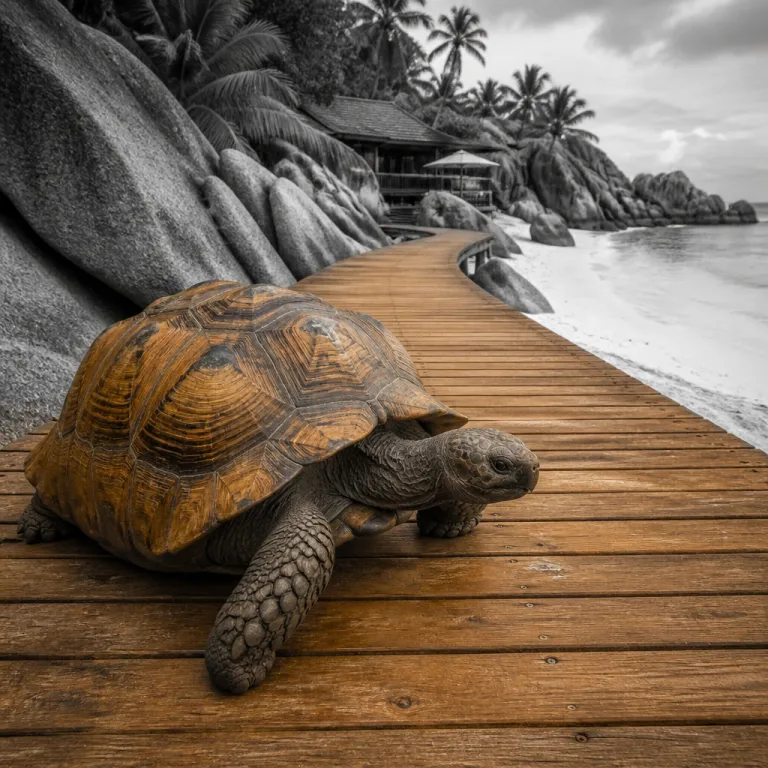
Giant tortoises in Seychelles and how luxury travellers can meet them
Giant tortoises in Seychelles are often the quiet highlight of a luxury stay. For many travellers, the first close look at a giant tortoise turns a beautiful beach holiday into a rare wildlife experience that feels deeply connected to nature. If you plan your time carefully, you can meet these Seychelles giants in comfort while still respecting their wild instincts.
The Aldabra giant tortoise, known scientifically as Aldabrachelys gigantea, is the emblematic species Seychelles is famous for. This giant reptile is native to remote islands in the western Indian Ocean, and Seychelles now protects an estimated 100,000 individuals through strict conservation measures.1,2,3 When you read about giant tortoises in glossy travel magazines, most of those stories quietly trace back to these Seychelles tortoises and their protected habitats.
Luxury and premium hotels across the archipelago increasingly design wildlife experiences around these giant tortoises. On Mahé and Praslin, high-end resorts arrange guided visits to sanctuaries where rangers monitor animals every day, combining five-star comfort with serious conservation messaging. For families, these curated experiences help children understand that they are meeting one of the largest tortoise species on Earth, not a pet in a garden.
Many guests arrive having heard about the famous Galápagos giant tortoise and the legendary Galápagos Islands. They are often surprised to learn that Seychelles developed its own, independent conservation story, with Aldabra tortoises evolving on remote coral atolls far from South America and Africa. When you compare Seychelles giant tortoises with the tortoises Galápagos naturalists study, you see parallel tales of isolation, adaptation, and long life spans that can exceed a century.
For travellers choosing between a Seychelles island resort and a trip to the Galápagos Islands, the decision often comes down to style of stay. Galápagos experiences tend to focus on expedition-style cruising, while Seychelles offers private pool villas, refined dining, and easy day trips to meet giant tortoises in controlled settings. Both places deliver unforgettable wildlife experiences, but Seychelles pairs its giant tortoises with some of the best spa and wellness retreats in the Indian Ocean.
Responsible hotels now work closely with conservation partners to ensure every guest interaction with a giant tortoise supports long-term protection. Staff explain why feeding is restricted, why touching is limited, and how breeding programme data helps scientists track the health of different tortoise populations across the islands. As one ranger on Mahé puts it, “We want guests to feel privileged, not intrusive, when they share space with these animals.” This balance between indulgent travel and serious conservation is what defines the most thoughtful luxury properties in Seychelles today.
Where to stay in Seychelles for meaningful giant tortoise encounters
Choosing the right island and hotel is essential if meeting giant tortoises in Seychelles is a priority for your trip. Some remote islands host free-roaming Aldabra tortoises that wander through palm groves, while others maintain carefully managed enclosures near guest villas. Your preferred level of wilderness, comfort, and privacy should guide which places you finally book.
Aldabra Atoll remains the most iconic Seychelles stronghold, although access is tightly controlled and usually reserved for specialist expeditions rather than standard luxury stays. This UNESCO-listed ring of remote islands shelters vast herds of Aldabra giant tortoises, where visitors can watch them graze in wild coastal scrub with almost no human infrastructure in sight. Aldabra was inscribed on the UNESCO World Heritage List in 1982, recognising its global importance for wildlife and especially for these tortoises.2 For most travellers, though, the more realistic option is to stay on islands such as Mahé, Praslin, or Cousine and join guided day trips to protected areas where Seychelles tortoises live under expert supervision.
On Praslin, premium resorts often collaborate with local conservation teams to offer curated wildlife experiences. Guests can combine a morning with giant tortoises that rangers from organisations such as the Seychelles Islands Foundation care for and an afternoon exploring the Vallée de Mai forest, home of the coco de mer. If you want a detailed slow travel itinerary that balances nature, beaches, and relaxed luxury, this one week guide to Praslin is a valuable resource to read before booking.
Cousine Island and other small private islands offer some of the best combinations of privacy and wildlife in Seychelles. Here, a family can wake to the sound of waves, step outside a villa, and sometimes see a giant tortoise browsing quietly near the path to breakfast. These intimate experiences feel different from visiting a public sanctuary, because the tortoises share the same island space as guests rather than being a separate attraction.
When comparing properties, ask specifically how they manage tortoises Seychelles-wide and what role they play in any breeding programme. Some islands host Aldabra tortoises as part of rewilding projects, while others focus on educational encounters that support conservation funding. The most transparent hotels will explain whether they work with the Seychelles government, the Seychelles Islands Foundation, international conservation organisations, or local communities to align guest experiences with long-term wildlife goals.
Location also shapes how easily you can combine giant tortoise encounters with other Seychelles travel highlights. A resort near Victoria on Mahé offers quick access to the capital’s markets and cultural sites, while still allowing half-day trips to nearby sanctuaries. More remote islands demand longer transfers but reward you with quieter beaches, darker night skies, and a stronger sense of sharing space with wild nature rather than visiting it for a short time.
Balancing romance, family travel, and wildlife when booking luxury stays
Many travellers arrive in Seychelles for romance, then fall in love again with its giant tortoises. Couples planning a honeymoon often want privacy and spa time, yet still hope for at least one meaningful wildlife encounter that feels authentic. The key is to choose a property that can tailor both intimate moments and guided nature experiences without forcing you into rigid schedules.
Some of the best honeymoon resorts in the Indian Ocean now integrate Seychelles giant tortoise encounters into private excursions. A concierge might arrange a morning visit to a conservation site, followed by a secluded beach picnic and an afternoon spa ritual back at the hotel. If you are weighing different romantic options, this guide on why Seychelles is the ultimate honeymoon destination in the Indian Ocean helps clarify how wildlife, scenery, and service standards combine across the archipelago.
Families, by contrast, often prioritise educational experiences that keep children engaged while still feeling safe and comfortable. Meeting a giant tortoise up close, learning that it belongs to one of the largest tortoise species on the planet, and hearing how long it can live creates a powerful memory. Parents can use these moments to talk about Africa, the wider Indian Ocean, and how conservation decisions on small islands influence global biodiversity.
Multi-generational groups benefit from the gentle pace of tortoise-focused outings. Grandparents can join short, flat walks to see tortoises that guides monitor, while younger travellers take more energetic hikes or snorkelling trips later in the day. Because giant tortoises move slowly and tolerate calm human presence, they are ideal wildlife companions for guests with varied mobility and energy levels.
Luxury hotels that understand these different needs often design tiered experiences. One day might feature a private tour of a breeding facility, where guests read interpretive panels about Aldabra tortoises and Seychelles–Galápagos style evolution stories. Another day might focus on relaxation, with only a brief visit to a shaded enclosure where a naturalist explains how Galápagos giant tortoises and Aldabrachelys gigantea followed parallel but separate evolutionary paths.
For couples or families who have already visited the Galápagos Islands, Seychelles offers a complementary narrative rather than a repetition. Where Santa Cruz Island in Galápagos is famous for its Charles Darwin Research Station, Seychelles highlights Aldabra Atoll and research initiatives led by organisations such as the Seychelles Islands Foundation on remote islands. Experiencing both regions over time gives travellers a deeper understanding of how the tortoises Galápagos scientists study and Seychelles tortoises share similar roles as ecosystem engineers in very different archipelagos.
How conservation shapes luxury hotel choices in Seychelles
Behind every serene photograph of giant tortoises in Seychelles lies a complex conservation story. Aldabra giant tortoises once faced intense pressure from hunting and habitat loss, and their survival today depends on coordinated efforts by the Seychelles government, international conservation organisations, and local communities. When you choose where to stay, you are also choosing which conservation model your travel money supports.
Current strategies focus on habitat protection, anti-poaching patrols, and carefully managed breeding programmes across several islands. Technology now plays a growing role, with research initiatives using GPS tracking and digital databases to monitor individual giant tortoises over long periods of time. These data help scientists understand how different populations respond to climate shifts, coastal erosion, and changing vegetation on remote islands.
Some proposed developments have sparked debate, particularly when luxury projects overlap with sensitive wildlife areas. Conservationists have publicly opposed certain hotel plans near key Aldabra tortoise habitats, arguing that short-term economic gains should not jeopardise long-term biodiversity. As a guest, you can read hotel sustainability reports and ask direct questions about how each property balances infrastructure with the needs of wild species.
Hotels that take conservation seriously usually integrate clear guidelines into guest experiences. You might be asked to keep a respectful distance from a giant tortoise, avoid loud noises, and never place children on a tortoise’s shell for photographs. These rules protect both the animals and the quality of the experience, ensuring that future visitors can still meet calm, unstressed Seychelles tortoises in natural settings.
Financial contributions also matter. Many premium properties channel a portion of room revenue or dedicated conservation fees into local projects that support wildlife and community livelihoods. When you stay at such a property, your travel budget helps fund ranger salaries, habitat restoration, and educational programmes that teach young Seychellois about the importance of their native wildlife.
Ecotourism, when managed carefully, can create a virtuous circle. Increased visitor interest in giant tortoises across Seychelles has generated more funding for research and protection, which in turn improves the quality of wildlife experiences for guests. As one conservation guideline for visitors puts it, “Visit Aldabra Atoll to see tortoises in natural habitat, respect wildlife guidelines, support eco-friendly tours.”
Designing an itinerary around giant tortoises and wellness
Many luxury travellers now design Seychelles itineraries that weave together wellness, gastronomy, and close encounters with giant tortoises. A typical week might include two or three wildlife-focused days, balanced by spa treatments, sailing excursions, and leisurely meals featuring fresh Indian Ocean seafood. This rhythm allows you to enjoy both the best hotel facilities and the archipelago’s unique wildlife without feeling rushed.
Start by deciding how many islands you realistically want to visit during your available time. Hopping between too many places can erode the sense of calm that makes Seychelles special, especially when you are travelling as a family or a couple seeking rest. Focusing on one main island, with a carefully chosen day trip to a tortoise sanctuary or a remote island reserve, often delivers a richer experience than constant movement.
Wellness-oriented resorts increasingly position giant tortoise encounters as part of a broader reconnection with nature. Morning yoga sessions might overlook forested hills where tortoises graze, while guided mindfulness walks end at quiet enclosures where guests sit silently near these ancient reptiles. For many visitors, the slow, deliberate movements of giant tortoises mirror the slower pace they hope to cultivate in their own lives after a busy year.
If spa and wellness are central to your plans, consider properties highlighted in this curated guide to Seychelles spa resorts worth the flight. Several of these hotels offer private excursions to see Aldabrachelys gigantea on nearby islands, ensuring that your wildlife experiences match the same high standards as your treatments and dining. Combining a morning with giant tortoises and an afternoon in a hydrotherapy suite creates a memorable contrast between rugged nature and refined comfort.
Food can also reflect the conservation story. Some chefs design tasting menus that highlight local produce while explaining how sustainable fishing and farming reduce pressure on fragile island ecosystems. Over dinner, you might read a short note about how your stay contributes to a breeding programme for Aldabra tortoises or supports research on Seychelles–Galápagos style evolutionary patterns.
Evenings are ideal for reflection. As trade winds move across the Indian Ocean and stars appear above the palm trees, many guests find themselves thinking about the immense time scales that shape both islands and giant tortoises. That sense of perspective, gained from a single quiet day spent near these animals, often becomes the most valuable souvenir of a Seychelles travel experience.
Comparing Seychelles and Galapagos for tortoise focused luxury travel
Travellers who are passionate about giant tortoises often compare Seychelles with the Galápagos when planning a major wildlife trip. Both archipelagos host iconic tortoise species, both sit in the middle of vast oceans, and both inspired scientific debates about evolution and adaptation. Yet the style of travel, level of luxury, and overall atmosphere differ in ways that matter when you are choosing where to book.
The Galápagos Islands are closely associated with Charles Darwin and the early development of evolutionary theory. On Santa Cruz Island, visitors tour the Charles Darwin Research Station, where they learn about Galápagos giant tortoise conservation and see breeding enclosures up close. These experiences feel strongly scientific, with a clear focus on research, fieldwork, and the unique tortoises Galápagos scientists have studied for generations.
Seychelles offers a parallel but distinct narrative centred on Aldabra tortoises and Aldabrachelys gigantea. Here, the emphasis falls on remote islands such as Aldabra Atoll, where vast numbers of giant tortoises roam freely across coral limestone and coastal scrub. While the scientific work is equally serious, the guest experience often feels more relaxed, with luxury hotels providing comfortable bases from which to explore nearby wildlife sites.
From a comfort perspective, Seychelles generally offers a wider range of high-end resorts with private villas, extensive spa facilities, and refined dining. Travellers who prioritise wellness, privacy, and easy beach access often find Seychelles giant tortoise encounters fit more naturally into their preferred style of holiday. Galápagos experiences, by contrast, tend to revolve around expedition ships and smaller lodges, with less emphasis on large-scale spa and wellness complexes.
Both destinations contribute to global conservation, but in slightly different ways. Galápagos programmes focus heavily on restoring specific tortoise subspecies to islands where they were once lost, while Seychelles invests in protecting existing strongholds of Aldabra tortoises and managing human impact on sensitive habitats. When you choose Seychelles, your travel spending supports a model where luxury, community livelihoods, and wildlife protection are designed to coexist on small islands.
For many travellers, the ideal path is not choosing one over the other, but visiting both regions at different times in life. Experiencing giant tortoises Seychelles style, with its blend of spa culture and coral islands, and then meeting tortoises Galápagos style, with its rugged volcanic landscapes, creates a layered understanding of how nature shapes travel. Each archipelago tells its own story, and together they show why these slow-moving giants continue to fascinate the world.
Key figures and conservation statistics about Seychelles giant tortoises
- The estimated population of Aldabra giant tortoises in Seychelles is around 100,000 individuals, according to sources such as Smithsonian Ocean and the Seychelles Islands Foundation, making it one of the largest remaining wild tortoise populations on Earth.1,3
- Aldabra Atoll was designated a UNESCO World Heritage Site in 1982, recognising its global importance for wildlife and especially for Aldabra tortoises.2
- Conservation programmes in Seychelles combine habitat protection, anti-poaching measures, and breeding initiatives, which together aim to stabilise or increase giant tortoise numbers over coming decades.
- Ecotourism linked to giant tortoises has generated increased conservation funding and stronger community involvement, creating financial incentives to maintain healthy tortoise populations on several islands.
- Aldabra giant tortoises can live for more than 100 years, with some individuals exceeding 150 years, meaning that conservation decisions made today will affect animals that outlive several human generations.1,3
1 Smithsonian Ocean; 2 UNESCO World Heritage Centre; 3 Seychelles Islands Foundation.
FAQ about giant tortoises and luxury stays in Seychelles
Where can I see giant tortoises in Seychelles while staying in comfort?
Guests can see giant tortoises in Seychelles at Aldabra Atoll, Cousine Island, and other protected areas that partner with high-end hotels. Many luxury resorts on Mahé and Praslin arrange guided visits to sanctuaries where Seychelles tortoises live under expert care. Always ask your hotel concierge which specific sites they work with and how they ensure responsible wildlife encounters.
How long do Aldabra giant tortoises live, and what does that mean for conservation?
Aldabra giant tortoises commonly live for more than 100 years, and some individuals exceed 150 years. This exceptional lifespan means that conservation plans must look far beyond typical tourism or political cycles. Protecting habitats today ensures that the same tortoises you meet on a Seychelles island holiday may still be alive when your grandchildren travel.
What do Aldabra giant tortoises eat, and can guests feed them?
Aldabra giant tortoises are primarily herbivorous and eat grasses, leaves, and fruits found in their natural habitats. Many sanctuaries and hotels prohibit guest feeding or allow it only under strict supervision, to avoid health problems and unnatural behaviour. Responsible properties explain these rules clearly so that every wildlife experience supports long-term animal welfare.
Are luxury hotels in Seychelles involved in tortoise conservation?
Several premium hotels in Seychelles actively support conservation through funding, guest education, and collaboration with local and international partners. Some contribute directly to breeding programmes or habitat restoration, while others focus on responsible visitor management at nearby sanctuaries. When booking, look for transparent information about how your stay benefits Seychelles giant tortoises and their ecosystems.
Is Seychelles or Galapagos better for a tortoise focused luxury holiday?
Seychelles generally offers more traditional luxury, with large spa resorts, private villas, and easy access to beaches combined with curated giant tortoise encounters. Galápagos provides a more expedition-oriented style, centred on small ships and research-focused visits to see Galápagos giant tortoises. Your choice depends on whether you prefer indulgent resort living with wildlife day trips or a more immersive, science-driven adventure.
